Nobody Cares About Your Feature List: Rehearsing the Five Questions a UK Journalist Will Actually Ask
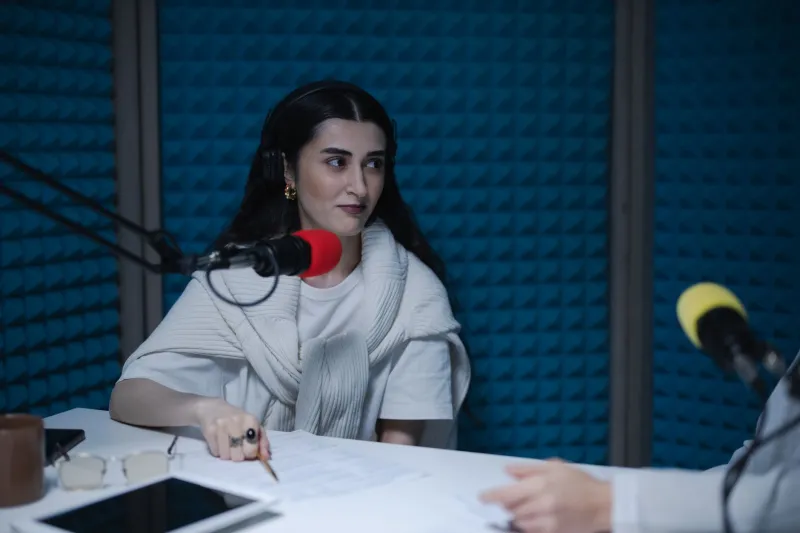
Ask a founder what they've rehearsed for launch day and you'll get a detailed answer about the demo: the seeded data, the fallback screen, the tab they close in case the API misbehaves. Ask what they've rehearsed for the interview afterwards and you'll get a slightly guilty pause.
That's backwards, and everyone knows it. A demo fails in front of a handful of people and you recover. An interview goes out to a few hundred thousand and it lives on a podcast feed for years. So block out ninety minutes this week and rehearse the conversation, not just the click-through.
Here's how to spend them.
First fifteen: the origin story, minus the history lesson
Most founders answer "tell me about the company" by walking through 2019. Nobody needs 2019.
Write two versions. One is a single sentence under twenty words — the one you'd use if a journalist is writing an intro while you're still talking. The other is a ninety-second version with a beginning, a turn and a stake: what you saw, what you tried, what it cost you to keep going.
Rehearse both out loud, ideally to someone who will tell you when you've started listing features. If your ninety seconds contains the phrase "and then we also added," cut everything after it.
Next forty-five: the five questions
There are more than five questions, but nearly everything a UK tech journalist asks on launch day is a variation on these. Practise the answers until they sound unrehearsed, then practise them again.
1. Why now?
This is a timing question, not a technology question. What changed in the market, the regulation, the cost curve or the behaviour of buyers that makes this launch make sense this quarter? "The tech is finally ready" is not an answer. "The FCA's rules changed in the autumn and every compliance team we spoke to was doing this in a spreadsheet" is.
2. Who cares?
Not "who's the market", which is a slide. Who specifically, how many of them, and what are they doing today instead? Have one named customer type, one number you can defend, and one sentence about the sad alternative they're currently living with.
3. What breaks?
This is the question founders flinch from, and it's the one that builds credibility. Have a real answer: the thing that doesn't scale, the assumption that could be wrong, the part of the stack you'd rebuild if you had another six months. Then say what you've done about it. "Nothing breaks" reads as either arrogance or inexperience.
4. Who's behind it?
Names, roles, and one line of relevant history each. UK journalists check Companies House and LinkedIn before the call, so your answer should match what's filed and listed. If you've got advisors, be precise about what they actually do — "advisor" covers everything from weekly calls to a photo on the site, and reporters notice the difference.
5. What happens next?
A date, not a direction. "We're growing" is noise. "We're in three more hospital trusts by March and we're hiring two engineers in Leeds" gives a journalist something to write down and something to check you against later.
Twenty minutes: bridging, without the waffle
Bridging is the art of answering a question you weren't asked without sounding evasive. The trick is to acknowledge the question properly before you move.
- "The short answer is X. The longer one, though, is Y."
- "I can't talk about the funding round yet — but what I can tell you is why we're building this in Sheffield."
- "That's the part people assume matters. What actually moved the needle was..."
What not to do: never say "no comment", which in print is a full stop with a full stop's worth of suspicion attached. Never say "as I said in the press release", which tells the journalist they're being handled. And if you don't know, say so and offer to come back — then actually come back the same day.
Have a stop-the-clock phrase agreed in advance for anything off-limits: unannounced funding, customers who haven't consented to be named, anything under NDA. Rehearse saying it once, calmly, so it doesn't arrive as a panicked swerve.
Ten minutes: the room changes the answers
A regional BBC slot is not the same interview as a trade title, and a podcast is a different species again.
Regional BBC wants the local story: jobs, skills, supply chain, the university spinout, the person who moved back to the area to do this. It's warmer and slower than you expect, and a stray technical acronym will get gently explained back at you for the benefit of the audience. Have a human detail ready.
Trade press wants category and comparison. Expect to be asked how you differ from the two companies a reader already knows. Have an honest answer that isn't a put-down, because the reporter will probably ring them afterwards.
Podcasts want the mess. They'll run for an hour and they will ask what went wrong. This is where your origin-story ninety seconds gets stretched into fifteen minutes of genuine conversation, so have two or three small failures in the back pocket. They'll do more for your credibility than any launch asset.
The closing checklist
Before you shut the laptop, make sure you've got all of this in one shared doc:
- A twenty-word description of the company, written and approved
- Three numbers you can defend under follow-up questioning
- Names and roles of everyone speaking on the record
- A "what breaks" answer with a mitigation attached
- One dated next milestone
- A spokesperson rota, so two founders aren't contradicting each other on the same morning
- The stop-the-clock phrase, in writing
- A calendar block for the two hours after each interview, because you'll want to write down what was asked
The interview isn't a performance. It's a conversation that happens to have an audience — but conversations go a lot better when you've had them once already, in a room, with someone who isn't being polite about your feature list.