The Label Under the Label: A Pre-Launch Rehearsal for 'Made in the UK' Claims
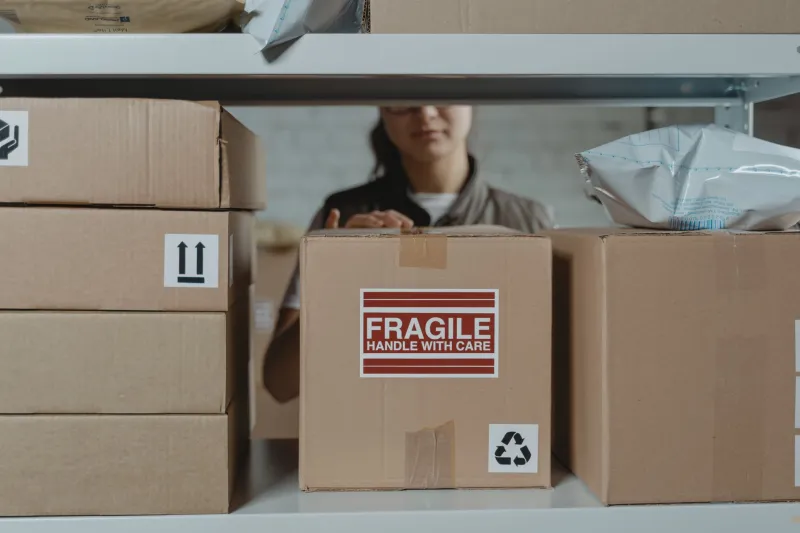
Most launch pages have a small flag somewhere. Sometimes it is a badge, sometimes a line in the footer, often a phrase in the first paragraph: made in the UK, produced in Britain, built here. It reads like a vibe. It lands as a promise.
The problem is that origin claims are one of the few marketing lines that arrive with an evidence request attached. Not always on day one. Sometimes six months later, when a retail buyer, a journalist or a local trading standards officer asks a very simple question: which product, which rule, and can you show me?
This is not a legal explainer. It is a rehearsal. The goal is to find out, in a quiet afternoon, whether your origin claim would survive being challenged — before it is printed on 5,000 boxes.
A flag is not a footnote
Founders tend to treat 'Made in the UK' as a tone-of-voice decision. It sits next to 'frictionless' and 'built for teams'. But origin is a factual claim about where a product was made, and UK consumer protection law treats misleading origin claims the same way it treats any other misleading claim. The Advertising Standards Authority's CAP code asks for accuracy, and asks you to qualify a UK claim if significant parts are imported. Trading Standards can act on complaints. The CMA's guidance on unfair commercial practices covers it too.
None of that means you cannot say it. It means the sentence has to be true for the specific product on the page, not for the company's general story.
'Made in' is not one rule — it is a stack of them
The first trap is assuming there is a single test. There is not.
For goods, HMRC's non-preferential origin rules generally ask whether the last substantial transformation happened here — not whether the company is UK-registered, not whether the founder is British, not whether the final assembly line is in Manchester. Product-specific rules can add detail. For food, DEFRA and FSA guidance adds its own layer, and 'made in the UK' may hinge on where the food was last processed in a way that changes its character.
Then there is a separate universe: preferential origin under the UK-EU Trade and Cooperation Agreement. That is about tariff treatment, not marketing. A product can qualify for zero-tariff trade and still not be safe to call 'Made in the UK' on a consumer page. Do not let one spreadsheet do both jobs.
And there is a third layer: the wording itself. 'Designed in the UK', 'assembled in Britain', 'packed in the UK' and 'made in the UK' are different claims with different evidence burdens. The Made in Britain mark is a private membership scheme, not a statutory pass — useful, but not a substitute for your own file.
The three folders every claim needs
Before launch, build three folders. If you cannot fill them, the claim is not ready.
1. The component map. Every part or ingredient, its supplier, and the country where it was made. For a hardware product this is a bill of materials with an origin column. For food it is a supplier and processing map. Costs help too, because value share often decides whether a transformation is substantial.
2. The transformation record. What actually changed here? Where? Who did it? Batch records, production photos with dates, factory addresses, subcontractor names. If a supplier does the final step, you need their records, not a verbal assurance.
3. The marketing file. The exact wording, every place it appears (site, packaging, deck, marketplace listing, pitch deck), who signed it off, the evidence behind it, and the date. This is the folder you hand over when someone asks. It should take ten minutes to assemble, not ten days.
Mixed origin is the normal case
Most UK startups are not making everything from scratch in a shed in Peebles. A bike assembled in Birmingham might have a Taiwanese frame, Japanese gears and Romanian wheels. A skincare brand filling in Leeds might import the base formulation. A coffee roaster in Bristol is working with beans from Colombia.
In those cases the honest claim is usually narrower: 'Assembled in the UK', 'roasted in Britain', 'formulated and filled in the UK'. That is not a weaker story. It is a more specific one, and early adopters tend to reward specificity.
The dangerous move is upgrading a narrow truth into a broad slogan because the broad one looks better on a hero image.
What a sceptic will actually ask
Run this list against your page now.
- Which product does the claim attach to — the whole range or one SKU?
- Which origin rule are you relying on, and why does it apply?
- Show me the component map with country of origin per line.
- What was the last substantial transformation, and where did it happen?
- Where exactly does the claim appear, and is it qualified nearby?
If any answer is 'I think so' or 'our manufacturer said', you have found the gap.
The 90-minute rehearsal
Book the time. Invite one person who did not write the copy — a co-founder, an ops lead, a friendly advisor. Give them the sceptic's brief.
- Pick the three origin claims closest to the launch page.
- Ask your sceptic to find counter-evidence for each, using only the three folders.
- Write the softened alternative for every claim that wobbles, before you need it.
- Log the decision: claim, evidence, owner, review date.
Ninety minutes now is cheaper than reprinting packaging in March. If the rehearsal exposes a real gap, you have two options: fix the supply chain story, or change the sentence. Both are fine. Shipping a claim you cannot defend is not.
Soften without losing the signal
A precise origin line can be a stronger trust signal than a flag. 'Built in the UK from imported components' tells an early adopter you know your own product. 'Designed in London, assembled in Sheffield' is a story. 'Made in the UK' with no qualifier is a promise that has to hold for every unit.
Before the print run, before the launch post, before the investor deck goes out, run the rehearsal. The label under the label is the one that keeps you out of trouble.